

The Government has declared its aspiration to transform the nation into a fully developed economy by 2047, a goal that rests heavily on the ability to create and modernize advanced transport networks. For this reason, public investment in infrastructure has been substantially increased, rising to 3.3% of GDP in the fiscal year 2024–2025.
At the center of this strategy is the PM Gati Shakti National Master Plan, introduced in 2021. This multi-ministerial program integrates sixteen ministries under a unified vision, creating a comprehensive digital platform to harmonize planning, design, and monitoring of infrastructure projects across the country. Its scope goes far beyond individual projects: it is intended to reshape India’s economic geography by linking industrial clusters, ports, cities, and rural areas through seamless multimodal connections.


The roads and highways sector is one of the most visible pillar of this transformation. India has set the target of expanding its national highway network to 200,000 kilometers by 2030, adding approximately 10,000 kilometers each year. This program is not limited to expressways alone, but also includes economic corridors, rural connectivity, and logistics hubs that reduce transport costs and improve regional accessibility.
At the same time, the railways are undergoing an equally dramatic modernization. With a network already exceeding 135,000 kilometers, India is introducing high-speed and semi-high-speed corridors, upgrading stations, and investing heavily in freight-specific lines that relieve congestion and improve efficiency. Together, the highway and railway sectors form the backbone of India’s infrastructure vision: a dual strategy to support the movement of goods and people at a pace that matches the country’s rapid economic growth.
India’s institutional framework for infrastructure is vast and diversified, reflecting its federal nature and the scale of its ambitions. Within this framework, several key actors represent the most relevant partners for international companies such as Avanguardia.
The Ministry of Road Transport and Highways (MoRTH) is the central authority for road infrastructure. It operates through its two specialized agencies: the National Highways Authority of India (NHAI), which manages expressways and long-distance corridors, and the National Highways & Infrastructure Development Corporation Limited (NHIDCL), which is focused on complex projects in mountainous and border regions.
Together, these bodies are responsible for tens of thousands of kilometers of highways and bridges, and for managing the contracts, supervision, and maintenance regimes that define the sector.

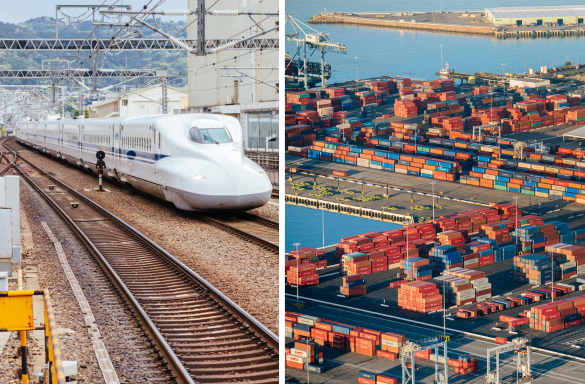
The Ministry of Railways is another cornerstone. Through Indian Railways and affiliated corporations such as DFCCIL (Dedicated Freight Corridor Corporation), RVNL (Rail Vikas Nigam Limited), and NHSRCL (National High-Speed Rail Corporation), it is reshaping both passenger and freight mobility. These agencies are in charge of ambitious projects ranging from semi-high-speed corridors to the country’s first bullet train between Mumbai and Ahmedabad.
The maritime sector falls under the Ministry of Ports, Shipping and Waterways (MoPSW), which is implementing the Sagarmala Program and the Maritime India Vision 2030 to expand cargo capacity, modernize ports, and develop port-led industrialization. This ministry ensures that India's 7,500 kilometers of coastline and 14,500 kilometers of navigable waterways become key drivers of trade and logistics.
At the States level, the Public Works Departments (PWDs) of each State play a decisive role in planning, constructing, and maintaining road networks, bridges, and public buildings. These departments represent essential interlocutors, as they manage projects that respond directly to local needs and conditions.
Finally, international development agencies have historically played, and continue to play, a fundamental role in India’s infrastructure expansion. Institutions such as the World Bank, Asian Development Bank (ADB), Asian Infrastructure Investment Bank (AIIB), and Japan International Cooperation Agency (JICA) have been active in the country since the late 1990s. Their concessional loans, technical assistance, and compliance frameworks are integrated into India’s planning process, especially for large-scale and high-visibility projects. For Avanguardia, these agencies remain both indirect stakeholders and essential facilitators, ensuring that projects follow international standards and often providing additional channels of access.

For Avanguardia, the most significant opportunities lie in the roads and highways sector, which represents the central axis of India’s development plan. The government’s decision to invest nearly USD 40 billion in this sector in 2024–2025 alone underscores the magnitude of the opportunity. There is a constant demand for expertise in the design and supervision of new highway projects, as well as in the maintenance of existing assets, including bridges and viaducts. Given the pace of construction and the challenges of long-term durability in India’s varied climates, specialized engineering services are increasingly vital. Avanguardia’s experience and experts positions the Company to contribute directly to this need, ensuring quality, safety, and sustainability in a sector that is expanding at unprecedented speed.
Alongside highways, the railways offer a parallel avenue of growth. The government is investing over USD 30 billion to modernize Indian Railways, with semi-high-speed corridors designed to bring major cities within a few hours’ travel and with freight corridors that reshape industrial logistics. These projects require advanced engineering, project management, and monitoring expertise, particularly in bridge construction and long-span viaducts, areas where Avanguardia can provide high-value services.
The ports and maritime sector, while smaller in scale compared to roads and railways, remains a key component of India’s connectivity strategy. Projects under the Sagarmala and Maritime India Vision 2030 are aimed at increasing port capacity, introducing digital systems, and building greenfield facilities. These initiatives open opportunities in port planning, logistics integration, and the application of advanced digital infrastructure.
Finally, India’s growing focus on strategic buildings and healthcare facilities introduces additional opportunities. Public hospitals and emergency centers are being upgraded to meet international standards of resilience and disaster preparedness. Though secondary compared to roads and railways, this segment highlights the breadth of India’s infrastructure expansion and the potential for diversified engagement.
(FY 2024–25); expansion to 200,000 km by 2030 (+10,000 km annually)
(FY 2024–25); semi-HSR and HSR projects; 3,360 km of freight corridors underway
allocated; Sagarmala pipeline of USD 66 billion; capacity target of 3,500 MTPA by 2030
DRIP; USD 10 billion Hydropower Mission by 2030
(PM-ABHIM); USD 3.7 billion (NHM 2024–25) for hospital resilience and critical care
This analysis reflects Avanguardia’s vision and in-depth knowledge of the Indian infrastructure market. Building on this understanding, we are uniquely positioned to create partnerships and deliver added value both through our technical expertise and our skilled personnel. At the same time, we serve as a bridge for international collaboration, supporting companies that wish to invest in or enter the Indian market. With our established presence in the country, we can provide access to the right stakeholders, ensure the proper channels of engagement, and guide investors toward high-return opportunities. In a rapidly expanding market characterized by massive public investment, Avanguardia represents a reliable partner capable of connecting international expertise with India’s growth trajectory.